Watercolor Racoon Clipart for Creative Projects
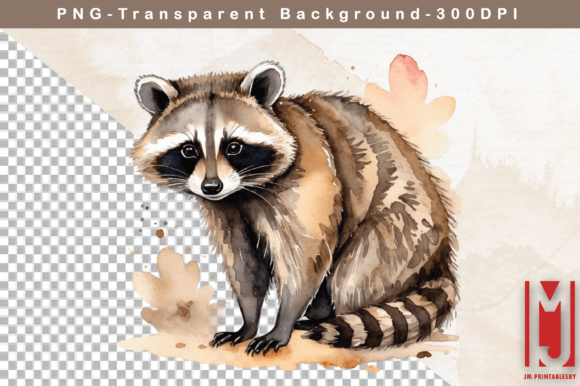
If you have spent any time browsing design assets lately, you have likely noticed the surge in hand-painted illustration sets. Among them, Watercolor Racoon Clipart stands out as a surprisingly versatile tool. On the surface, it is a collection of raccoon illustrations rendered in soft, layered watercolor washes. But look closer, and you will see a design resource that bridges whimsy and professionalism, making it valuable for everything from casual craft projects to serious brand identity work.
The visual appeal comes from the medium itself. Watercolor lends a organic, slightly unpredictable quality that vector illustrations often lack. The raccoon subjects carry their own personality—curious, clever, a little mischievous—and the watercolor treatment softens their edges, making them approachable rather than intimidating. You get subtle color bleeds, gentle gradient shifts, and paper texture that reads as tactile even on screen. This is not clipart in the old, stiff sense. It has depth, atmosphere, and a handmade feel that audiences instinctively trust.
Why Watercolor Raccoon Clipart Works Across Projects
The real strength of this asset lies in its adaptability. Because the style is illustrative but not cartoonish, it fits contexts where photography feels too literal and flat vector icons feel too sterile. Here are a few places where it shines naturally.
Branding and Logo Design
Small businesses, especially those in the creative or lifestyle space, often struggle to find imagery that feels personal without looking amateur. Watercolor Racoon Clipart offers a middle ground. A single raccoon illustration used as a logo mark communicates approachability and craftsmanship. Coffee shops, children’s boutiques, nature-focused brands, and even tech startups looking for a friendly mascot have all found success with this kind of visual. The watercolor texture adds a premium tactile quality that a clean vector often cannot match.
Packaging and Product Design
Packaging is where the hand-painted look really earns its keep. Products aimed at parents, pet owners, or nature lovers benefit from the warmth of watercolor. Think tea tins, gift wrap, candle labels, or stationery sets. The raccoon motif invites curiosity without overwhelming the product information. When paired with a clean serif font or a simple sans serif for the body copy, the clipart becomes the hero element that drives shelf appeal.
Social Media and Digital Content
In a crowded feed, authenticity cuts through. Watercolor Racoon Clipart works exceptionally well for social media graphics because it does not look templated. Bloggers and content creators use these illustrations for featured images, quote cards, and email headers. The soft color palette makes text overlay easy to read, and the raccoon’s expressive posture draws the eye without competing with your message. For Instagram, Pinterest, and even YouTube thumbnails, this style outperforms generic stock photography in engagement metrics.
Editorial and Print Publishing
Magazines, zines, children’s books, and educational materials benefit from the narrative quality of watercolor illustrations. A raccoon clipart can anchor a story about wildlife, creativity, or urban adventure. Because the asset comes pre-rendered, it saves illustrators and layout designers hours of production time while still delivering a bespoke look. In editorial design, where visual hierarchy matters deeply, a well-placed watercolor element can break up text blocks and guide the reader through the page naturally.
How Clipart Influences Readability and Brand Perception
It might seem strange to talk about readability in the context of clipart, but the connection is real. When you place an illustration near text, the visual weight, color contrast, and subject matter all affect how easily a reader processes the information. Watercolor Racoon Clipart, with its soft edges and muted saturation, sits comfortably alongside type without overwhelming it. Unlike high-contrast photography or busy vector patterns, watercolor allows the text to remain the primary focus while still adding atmosphere.
From a brand perception standpoint, the choice of illustration style signals your values. A watercolor raccoon tells your audience that you value craftsmanship, warmth, and individuality. It positions your brand as approachable rather than corporate, thoughtful rather than rushed. This is especially important for entrepreneurs and small business owners who compete against larger players relying on polished but generic imagery. The hand-painted quality builds recognition because it is inherently less repeatable. No two watercolor washes look exactly the same, and that uniqueness sticks in the viewer’s memory.
Consistency across touchpoints also improves when you commit to a distinctive illustration style. Using Watercolor Racoon Clipart across your website, social media, packaging, and print materials creates a cohesive visual language. Your audience begins to associate the raccoon motif with your brand, which shortens the recognition time and deepens emotional connection. This is the same principle that drives successful mascot branding—just executed with a more sophisticated, artistic veneer.
Practical Guidance for Choosing and Using the Asset
Before you download and drop a raccoon into your next project, there are a few considerations worth weighing. Not every clipart set is created equal, and the wrong choice can undermine the professional effect you are after.
Evaluate Project Fit First
Ask yourself whether the raccoon motif actually serves your message. If your brand is about high-tech security or luxury finance, a watercolor raccoon might confuse your audience. But if you sell children’s books, organic snacks, nature apparel, or creative services, the fit is natural. The key is alignment between subject and audience expectation. A raccoon works because it is familiar and non-threatening, but it still carries enough character to feel specific. That specificity is what makes it memorable.
Check the Included Styles and Variations
Good clipart sets offer more than one pose or expression. Look for assets that include multiple raccoon illustrations—sitting, standing, looking left, looking right, perhaps holding an object. This variety gives you flexibility to compose scenes or repeat the motif without monotony. Also check whether the set includes coordinating elements like leaves, berries, or abstract watercolor splashes. These extras make it easier to build a complete composition without mixing styles from different sources.
Test Font Pairings Early
The wrong font can kill the charm of even the best illustration. Watercolor Racoon Clipart pairs best with typefaces that share its handmade warmth. A handwritten script font or a relaxed serif like a modern slab serif works beautifully. Avoid cold, geometric sans serifs unless you are deliberately creating contrast for a modern twist. Test a few combinations in your layout software before committing. The relationship between the clipart and the typography should feel intentional, not accidental. If you are using the clipart in a logo, consider a custom lettering approach or a premium display font that echoes the brushstroke quality of the watercolor.
Review Readability at Different Sizes
Watercolor details can get muddy when scaled down too far. Make sure your chosen clipart retains its clarity at the sizes you need—especially for social media avatars, business cards, or mobile layouts. If the raccoon loses its facial features or becomes a blurry blob at small scale, consider using a simplified version or placing it only in larger hero areas. Conversely, oversized applications like posters or website banners let the watercolor texture shine, so lean into those opportunities.
Understand the Commercial Licensing
This is where many creatives and business owners get tripped up. Not all clipart licenses allow commercial use. Read the terms carefully before using Watercolor Racoon Clipart in products you intend to sell, whether that is printed merchandise, digital templates, or branding for paying clients. Some licenses restrict use in logos or require attribution. Others grant full commercial rights but limit the number of copies. If you are a designer sourcing assets for client work, look for a commercial font or design asset license that explicitly covers redistribution and end-product sales. When in doubt, contact the creator directly.
Real-World Design Observations
I have seen Watercolor Racoon Clipart used effectively in a wedding invitation suite—not the obvious choice, but it worked because the couple were wildlife biologists. The raccoon became a subtle nod to their profession without dominating the romantic tone. In another case, a small soap company used the clipart on every product label, building a consistent woodland theme across their entire line. Customers began recognizing the brand by the raccoon alone, which is the dream outcome for any small business investing in design assets.
The common thread in these examples is restraint. The clipart was never used in isolation. It sat within a well-considered layout alongside thoughtful typography and plenty of white space. The watercolor texture did the heavy lifting emotionally, while the structure kept the design professional. That balance is what separates a polished brand from a craft project.
Final Thoughts on Choosing Design Assets
Watercolor Racoon Clipart is not a magic solution, but it is a genuinely useful tool when applied with intention. It brings personality without sacrificing professionalism, and it fits the growing demand for authentic, handcrafted visual content across digital and print media. Whether you are building a brand identity, designing packaging, or creating content for your blog, this style of illustration offers a shortcut to emotional resonance that polished vectors rarely achieve.
Just remember that the clipart is only one element in a larger system. Pair it with strong typography, consistent color palettes, and clear hierarchy, and you will have a design that feels both unique and reliable. That is the kind of work audiences trust—and the kind that keeps them coming back.