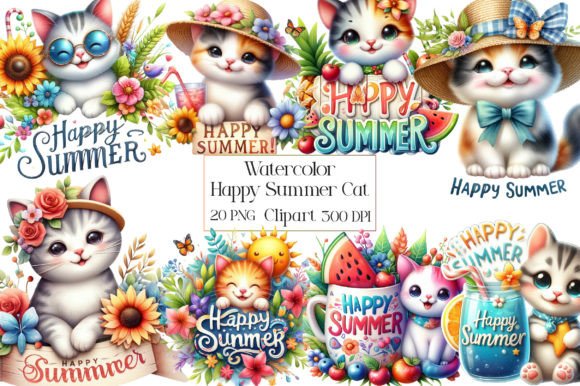
Watercolor Happy Summer Cat Clipart: A Playful Design Asset
Visual storytelling often starts with the right set of assets, and few things capture warmth and playfulness quite like a hand-painted summer cat. The Watercolor Happy Summer Cat Clipart set brings together whimsical feline charm with the soft, organic feel of watercolor washes. Whether you are building a brand identity for a boutique pet shop, creating seasonal social media graphics, or designing printables for a craft fair, this clipart offers a distinct personality that stands out in a sea of generic stock illustrations.
The appeal lies in its imperfections. Watercolor strokes create natural color bleeds, uneven edges, and gentle transparency that mimic real brushwork. When you add elements like sun hats, sunglasses, ice cream cones, or seashells, the cats feel alive with seasonal joy. This is not stiff, vector-perfect art. It is expressive, slightly unpredictable, and full of warmth. For designers and content creators, that emotional quality is often the difference between a piece that gets scrolled past and one that earns a second look.
Visual Characteristics and Personality
At its core, the Watercolor Happy Summer Cat Clipart set revolves around soft pastel palettes mixed with brighter pops of coral, lemon yellow, and sky blue. The cats themselves are depicted in relaxed poses—lounging, stretching, or playfully batting at a butterfly. The watercolor technique gives each illustration a layered depth that flat digital art cannot replicate. Shadows are soft, highlights are subtle, and the overall texture feels almost tactile.
The personality is friendly, carefree, and slightly nostalgic. It reminds viewers of summer afternoons, outdoor markets, and handmade greeting cards. This makes it particularly effective for projects targeting a feel-good audience. A children’s book illustrator might use it for a playful spread. A lifestyle blogger could feature it in a summer recipe roundup. A small business selling handcrafted candles might incorporate the clipart into their packaging to reinforce a natural, artisanal vibe.
Unlike rigid design systems where every element must be pixel-perfect, this clipart invites a looser, more organic approach. It works well when layered with handwritten fonts, textured backgrounds, or even other watercolor elements. The key is to let the artwork breathe—avoid overcrowding it with heavy typography or competing patterns.
Where It Shines Across Creative Projects
One of the strongest qualities of this clipart is its versatility across media. In digital spaces, it excels on social media graphics for Instagram stories, Pinterest pins, or Facebook posts that need a cheerful visual anchor. The watercolor texture translates beautifully onto screens, especially when paired with a clean, minimal layout. Use a single cat illustration as a hero image with a short quote overlaid in a simple sans serif, and you have an instant engagement piece that feels curated, not cluttered.
For print projects, the clipart is a natural fit for packaging design, stationery, and event invitations. Imagine a summer lemonade stand using these cats on their labels, or a pet store using them on thank-you cards. The tactile quality of watercolor echoes the physicality of print, making the final product feel more deliberate and premium. Editorial designers might use a cluster of these cats as a decorative element in a magazine spread about summer pet care, adding a lighthearted contrast to more serious content.
Brand identity work also benefits from this kind of asset. A small business building a brand around warmth, approachability, and seasonal joy can use the clipart as part of their visual language. It can appear on tote bags, banners, or website hero sections. Because the set likely offers multiple poses and color variations, you can maintain visual consistency while avoiding repetition—a common challenge when using limited stock art.
How It Influences Readability, Hierarchy, and Brand Perception
Design assets like this clipart do more than decorate—they shape how viewers process information. The soft, rounded forms of the cats and the gentle color transitions create a low-contrast visual field that feels easy on the eyes. This can actually support readability when used thoughtfully. For instance, placing a cat illustration to the left or right of a block of text directs the reader’s eye without competing for attention. The watercolor edges naturally create a soft boundary that frames content rather than overpowering it.
Visual hierarchy also benefits from the clipart’s inherent lightness. Because watercolor lacks the hard edges of vector graphics, it sits at a different visual weight than bold typography or solid background colors. This allows you to use the cats as secondary elements that guide the viewer’s journey through a composition. A large headline in a strong serif font sits confidently above a delicate cat illustration, with the image providing emotional context without stealing the headline’s prominence.
Brand perception shifts dramatically with visual tone. A brand that consistently uses playful, hand-painted elements like this clipart signals creativity, approachability, and a human touch. It suggests that the business values craftsmanship and personality over sterile efficiency. For a startup or small brand, that perception can be a major differentiator in a crowded market. On the flip side, pairing this art with overly corporate typography or rigid grid systems can create visual dissonance. The clipart asks for some flexibility in your layout approach—embrace white space, allow for asymmetry, and let the art feel spontaneous.
Practical Guidance on Choosing and Using the Clipart
Before you commit to a clipart set, evaluate how its style matches your project’s overall aesthetic. Ask yourself whether the watercolor texture aligns with your existing brand identity or the mood you want to create. If your brand leans heavily on minimalism and strict geometry, introducing a hand-painted cat might feel jarring unless you intentionally use it as a contrasting accent. For most playful or lifestyle-oriented projects, however, this set will integrate smoothly.
Testing font pairings is another essential step. The Watercolor Happy Summer Cat Clipart pairs best with handwritten scripts or clean sans serifs. A loose, brush-style script echoes the brushstrokes of the watercolor, creating harmony. A simple geometric sans serif provides contrast and prevents the overall design from feeling too fussy. Avoid pairing the clipart with heavy decorative serifs or condensed fonts, as they can overpower the delicate art. Create a few mockups to see how the typography sits next to the cats—adjust spacing, size, and placement until the composition breathes.
Reviewing the included styles and variations matters, too. A good clipart set offers multiple poses, expressions, and colorways so you can build a cohesive system without repeating the exact same image. Check if the set includes vector files for scalability or only raster images. For print projects, high-resolution PNGs or layered PSD files are ideal. For web use, smaller file sizes with transparent backgrounds save loading time. Always verify the commercial licensing terms before using the art in products you sell, such as printed merchandise or digital templates. Many clipart sets allow commercial use, but restrictions may apply regarding redistributing the raw assets or using them in trademarked logos.
Real-World Implementation Ideas
If you are a content creator planning a summer content calendar, consider using one cat illustration per week as a consistent visual thread across your posts. Use a different color variation each time to keep the feed fresh. For a wedding invitation suite with a brunch theme, watercolor cats in sun hats could replace traditional floral motifs on the enclosure cards. A children’s activity book might feature the cats as characters for a coloring page or sticker sheet. In each case, the clipart provides a ready-made visual hook that saves hours of custom illustration time.
Entrepreneurs selling printable wall art can bundle several cat illustrations into a downloadable set, offering customers instant decor with a handmade feel. Marketers running A/B tests on email campaigns might find that including one of these cats in the header increases click-through rates simply by adding a warmth that stock photos often lack. The key is to treat the clipart not as a filler, but as a deliberate design choice that reinforces your message.
Ultimately, the Watercolor Happy Summer Cat Clipart works best when you lean into its strengths: softness, playfulness, and a sense of seasonal joy. It invites creativity rather than constraining it, and that flexibility is what makes it a valuable addition to any designer’s toolkit. Whether you are building a full brand identity or simply adding personality to a single post, this asset delivers a genuine emotional connection that resonates with audiences who appreciate the handmade and the heartfelt.