Watercolor Halloween Teddy Bears Clipart
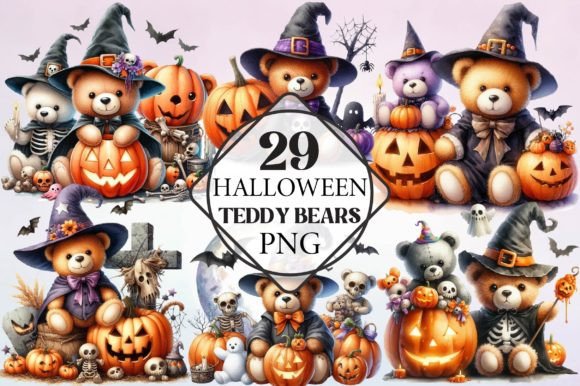
Halloween is a massive opportunity for creatives and business owners, but sourcing design assets that feel fresh and intentional can be surprisingly difficult. Generic Halloween imagery often leans too heavily into either cartoonish kitsch or graphic horror, leaving little room for projects that need warmth, charm, or a handcrafted touch. That is exactly where the Watercolor Halloween Teddy Bears Clipart set comes into play. It offers a refreshing middle ground that appeals to designers, small business owners, and hobbyists alike, blending the tactile beauty of watercolor with the nostalgic comfort of teddy bears. The result is a versatile collection that works for everything from cozy autumn marketing campaigns to whimsical children’s party decor.
The Artistic Appeal of Cozy Spooky Design
What makes this particular asset stand out is its distinct visual personality. The watercolor medium brings a level of depth and authenticity that flat digital vectors simply cannot replicate. You see subtle bleeding at the edges, gentle granulation in the pigment, and soft transitions between colors. These organic imperfections create a tactile illusion of paper and paint, which immediately registers as premium and artistic in the viewer’s mind.
The teddy bear motif adds another layer of psychological appeal. Bears are universally recognized symbols of comfort, nostalgia, and childhood. By placing them within a Halloween context—surrounded by pumpkins, bats, or in costume—the artwork bridges two powerful emotional states: the cozy security of home and the playful thrill of spooky season. This "cozy spooky" or "whimsical gothic" aesthetic is incredibly popular right now across social media graphics, packaging design, and boutique branding. It feels sophisticated without being cold, and festive without being overwhelming.
For a creative professional, understanding this tonal balance is key. The Watercolor Halloween Teddy Bears Clipart isn’t just a collection of cute images; it is a carefully curated set of design assets that communicate a specific mood. When you drop one of these bears onto a flyer, a website header, or a product label, you instantly import that sense of handcrafted artistry. It tells your audience that you value aesthetic nuance and attention to detail.
Strategic Applications Across Different Project Types
The real test of any design asset is its versatility. This set performs well across a surprisingly wide range of media and industries because it avoids extreme stylistic niches.
Branding, Packaging, and Small Business Identity
If you run a small bakery, a children’s boutique, or a stationery shop, seasonal branding is a powerful tool for driving engagement. Using standard stock imagery can make your brand look generic, but a cohesive set like this allows you to craft autumn marketing materials that truly stand out. Imagine a handmade soap label featuring a subtle watercolor teddy bear holding a piece of candy corn, or a limited-edition coffee bag adorned with a bear wearing a witch’s hat. The watercolor texture instantly elevates the product from homemade to artisanal.
When building a cohesive brand identity, consistency is critical. Using a single set of design assets ensures that your logo, your social media graphics, and your print materials all speak the same visual language. It creates a seamless experience for your customer and builds brand recognition over time.
Digital Content, Editorial, and Web Design
For bloggers, publishers, and social media managers, maintaining a fresh feed during the Halloween season can be a challenge. The Watercolor Halloween Teddy Bears Clipart provides an instant focal point for Instagram carousels, Pinterest pins, or email headers. Because the artwork has a soft, organic texture, it naturally draws the eye without competing with your written content. Used sparingly as hero images or section dividers on a website, these bears add a narrative quality that photography sometimes cannot match.
In editorial design, such as a seasonal zine or a community newsletter, this clipart breaks up text blocks effectively. It adds visual breathing room and injects personality into what might otherwise be a dense page. The key is to let the asset breathe—give it enough whitespace so that the delicate watercolor bleeds and soft edges remain visible and impactful.
Mastering Visual Hierarchy and Font Pairings
A common challenge with highly detailed clipart is managing visual hierarchy. Because watercolor textures have soft, irregular edges, they don't sit rigidly on the page. This is where thoughtful typography becomes your most valuable tool.
Pairing the Watercolor Halloween Teddy Bears Clipart with the wrong typeface can quickly make a layout feel chaotic. A heavy, condensed display font might overwhelm the delicate paint strokes, while a very ornate script font could compete for visual attention. My recommendation is to anchor the composition with a clean, neutral sans serif font for body text. A geometric sans serif, for example, provides a stable, modern counterpoint to the organic, hand-painted bears.
For headlines or short titles, you have more room for creativity. A playful handwritten font or a loose script font can echo the fluidity of the watercolor medium, creating a unified, whimsical feel. This intentional font pairing is what elevates a project from a simple cut-and-paste job into professional branding. You can also pull specific colors directly from the clipart using an eyedropper tool and apply them to your typography. This creates a color palette that feels cohesive and intentional, strengthening your overall brand identity.
Practical Guidance for Choosing and Using Design Assets
Before you download and start designing, there are a few practical considerations that will save you time and prevent headaches down the road. As someone who has managed countless marketing campaigns, I always look at these specific factors before committing to a set.
- Resolution and Scalability: Check whether the files are provided at a high resolution (300 DPI or higher). If you plan to use the clipart for print projects like posters, packaging, or greeting cards, low-resolution images will appear pixelated and unprofessional. High-resolution files are non-negotiable for serious commercial work.
- File Format and Transparency: Look for PNG files with transparent backgrounds. This drastically reduces your production time because you can drop the bears directly into your layout without tedious manual masking. SVG files are also useful if you need to scale the artwork dynamically for web design.
- Color Palette Cohesion: Does the clipart use a consistent color palette? If you are using multiple assets from the set, they should look like they belong together. A cohesive color story makes your brand identity feel more intentional and polished.
- Commercial Licensing: This is the most critical step. Not all clipart sets are licensed for commercial use. Some are strictly for personal projects. If you are a small business owner creating merchandise, logos, or product labels, you absolutely need a commercial license. Always read the fine print to ensure your intended use is covered. Investing in a properly licensed set protects your business and respects the creator’s work.
Finally, always test your layout. Place the clipart into your design software alongside your chosen typeface and make sure the visual hierarchy works. The clipart should enhance your message, not distract from it. When it is done right, the combination of handcrafted watercolor texture and clear, modern typography creates a powerful contrast that feels both timeless and fresh.
The best design assets solve a creative problem while inspiring new ideas. The Watercolor Halloween Teddy Bears Clipart does exactly that, offering a rare blend of artistic sophistication and real-world usability. Whether you are designing for a brand, a blog, or a personal project, this set provides the visual foundation for something memorable and effective.