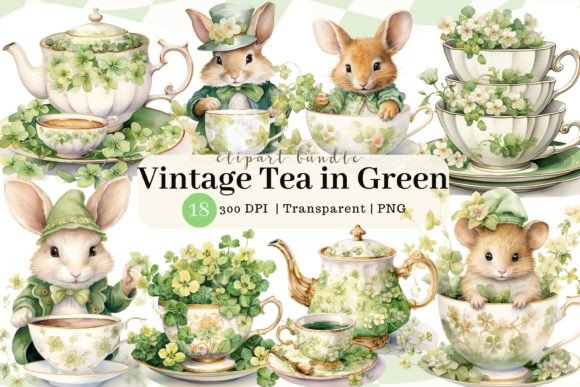
Vintage Tea Cup Watercolor Clipart
There is something quietly magnetic about a hand-painted teacup. The soft bleed of watercolor along the rim, the subtle gradient of a floral motif, the gentle imperfection of a brushstroke that no digital filter can replicate. Vintage Tea Cup Watercolor Clipart has become a go-to design asset for creatives who want to infuse their projects with warmth, nostalgia, and a distinctly artisanal feel. Whether you are designing for a tea brand, a lifestyle blog, or a personal stationery line, this style of clipart offers a visual language that feels both familiar and refined. It is not just decoration — it is a tool for storytelling, brand perception, and audience connection.
The appeal lies in the balance between precision and looseness. Unlike crisp vector icons, watercolor clipart retains the organic quality of real paint. The edges are soft, the colors translucent, and the overall effect is one of authenticity. When you place a teacup illustration into a layout, it carries the suggestion of handmade care — a quality that resonates deeply with audiences tired of overly polished, template-driven visuals. In an era where consumers crave connection and craft, this clipart style delivers exactly that.
What Makes Watercolor Tea Cup Art So Appealing
To understand the growing popularity of Vintage Tea Cup Watercolor Clipart, it helps to look at what it actually brings to a composition. The visual characteristics are distinct: soft washes of color, layered transparency, and a palette that often leans toward muted pastels, dusty roses, sage greens, and warm creams. These are not flat, lifeless illustrations. They carry the texture of paper and the unpredictability of wet pigment. That unpredictability is exactly what makes them feel human.
The personality of this clipart is best described as whimsical yet elegant. It can lean romantic with delicate floral accents or feel more rustic with earthy tones and loose brushwork. It suits a wide range of moods — cozy and homey, refined and vintage, playful and cottagecore. Because watercolor naturally diffuses and blends, the resulting images have a dreamy quality that works beautifully in both digital and print contexts. A teacup rendered in watercolor already feels steeped in history, as if it came from a grandmother's china cabinet or a quaint English tearoom.
What makes it stand out from other design assets is its ability to add emotional weight without demanding attention. A watercolor teacup can sit quietly in the background of a website header or serve as the focal point of a greeting card. It adapts to the role you give it. That versatility is rare in clipart, and it is why designers, bloggers, and small business owners keep returning to this style.
Where Vintage Tea Cup Watercolor Clipart Shines in Real Projects
The real strength of Vintage Tea Cup Watercolor Clipart is how naturally it fits across different project types. You are not limited to one niche. Consider branding for a small tea company or a cozy café — placing a watercolor teacup on packaging, menus, or signage immediately communicates warmth, tradition, and quality. It tells the customer that this is not a mass-produced experience. Pair it with a well-chosen serif font for a classic feel, or a handwritten font for a more personal touch. The clipart becomes the visual anchor, and the typography supports the mood.
In editorial design, the clipart works beautifully as chapter openers, sidebar accents, or pull-quote decorations in lifestyle magazines or recipe blogs. A teacup illustration can break up text-heavy pages and guide the reader's eye without needing heavy graphic elements. Bloggers and content creators often use these assets for Pinterest pins, Instagram posts, and featured images. Because watercolor has a natural softness, it blends well with photography and textured backgrounds, making social media graphics feel more cohesive and less like generic stock imagery.
Packaging design is another strong application. Product labels for loose-leaf tea, honey, jam, or baked goods benefit from the handcrafted look of watercolor clipart. A small teacup motif on a kraft paper tag or a glass jar lid can elevate the entire product. It signals care and attention to detail. For small business owners selling on platforms like Etsy, this clipart becomes a cost-effective way to create branded packaging without hiring an illustrator.
Personal projects also benefit. Wedding invitations, bridal shower stationery, anniversary cards, and thank-you notes all take on a sentimental quality when adorned with watercolor teacups. Journaling enthusiasts and bullet journal users find that printed or digital clipart adds a professional finish to their spreads. The visual charm of watercolor makes even simple layouts feel intentional.
How Watercolor Clipart Shapes Brand Perception and Audience Engagement
Every design choice you make communicates something to your audience. When you choose Vintage Tea Cup Watercolor Clipart, you are signaling a preference for authenticity over polish, for tradition over trendiness. This matters because audiences today are highly attuned to visual sincerity. A brand that uses hand-painted-style assets often feels more trustworthy, more approachable, and more invested in its identity. Watercolor clipart carries an inherent softness that can make a brand feel nurturing, thoughtful, and grounded — qualities that resonate especially well in the lifestyle, food, and wellness spaces.
From a visual hierarchy standpoint, watercolor clipart offers flexibility. Because the edges are soft and the colors are often muted, these illustrations can sit behind text without overwhelming readability. A sans serif font overlaid on a light watercolor wash creates a clean, modern contrast. A script font placed next to a detailed teacup illustration feels graceful and cohesive. The clipart works as both a background texture and a foreground element, depending on the opacity and scale you choose. This makes it a valuable tool for creating layered compositions that feel rich without being cluttered.
Brand consistency also benefits from using a cohesive set of watercolor clipart. When you use the same style across your website, social media, packaging, and print materials, you build a visual language that is instantly recognizable. A teacup motif repeated across touchpoints becomes a symbol. Over time, your audience associates that watercolor aesthetic with your brand's personality. That is the kind of recognition that fosters loyalty and engagement. People do not just buy tea — they buy the feeling that the packaging, the imagery, and the story create together.
Engagement itself improves when content feels shareable. Watercolor clipart has a way of making digital content feel more tactile and personal. A blog post featuring a beautifully styled teacup illustration is more likely to be pinned, saved, or shared than one with a generic stock photo. The handmade quality invites a second look. For content creators and marketers, that extra moment of visual interest can translate into longer time on page, more social shares, and stronger audience connection.
Choosing and Using Watercolor Tea Cup Assets the Right Way
Not all Vintage Tea Cup Watercolor Clipart is created equal, and choosing the right set for your project requires some consideration. Start by evaluating the overall style and color palette. Some clipart collections lean heavily pastel and floral, while others offer more muted, earthy tones. Think about your brand's existing identity or the mood you want to create. A tea brand targeting a younger audience might prefer brighter, more playful watercolors, while a heritage-focused product line would benefit from faded, antique-inspired tones.
Resolution and format are practical concerns. For print projects, you need high-resolution files — at least 300 DPI. Many watercolor clipart sets come as PNG files with transparent backgrounds, which is ideal for layering over other design elements. Some collections also include JPG versions with white backgrounds, good for digital use. Always check whether the clipart comes in individual files or a single sheet. Individual files give you more flexibility in layout and scaling.
Font pairing is where your typography knowledge comes into play. Watercolor clipart has a soft, organic feel, so it pairs best with fonts that either complement or contrast that softness. A classic serif font like a refined Garamond or a modern slab serif can ground the airy watercolor with structure. A script font that mimics handwriting adds a romantic, flowing quality. For a more contemporary look, try a clean sans serif font — the contrast between the rigid typography and the loose watercolor creates visual tension that feels intentional and fresh. Avoid pairing watercolor clipart with overly ornate or gothic fonts, as the combination can become visually heavy and hard to read.
Readability considerations matter, especially if you are placing text over or near the clipart. Watercolor washes are generally light enough to work as backgrounds, but a dark or heavily saturated image will compete with your text. If you need to place text directly over the clipart, consider lowering the opacity, adding a subtle shadow, or using a white text box with transparency. When using the clipart as a decorative accent, position it so that it guides the eye rather than interrupts the reading flow. Left-aligned teacups work well for text-heavy layouts, while centered placements suit invitation designs and headers.
Commercial licensing is another critical factor. If you are a designer or small business owner creating products for sale, make sure the clipart set you purchase includes a commercial license. Some sets allow unlimited commercial use, while others restrict the number of products you can create or require attribution. Read the license terms carefully. A reputable provider will clearly state usage rights. Avoid using free clipart sets unless they explicitly grant commercial rights — the legal risk is not worth the savings. Investing in a commercial font and a properly licensed clipart set ensures your work is protected and professionally grounded.
Finally, think about how you will use the clipart across multiple projects. A well-chosen collection can become a core part of your design assets library. When you find a set that matches your brand's aesthetic, you can use it for years — for seasonal promotions, product updates, social media campaigns, and more. The consistency pays off. Your audience will start to recognize the visual style before they even read the logo. That is the mark of a cohesive brand identity.
Vintage Tea Cup Watercolor Clipart is more than a decorative shortcut. It is a design asset that brings texture, emotion, and authenticity to every project it touches. Whether you are designing packaging for a new tea blend, creating content for a lifestyle blog, or crafting invitations for a special event, the hand-painted quality of watercolor clipart helps you communicate care and craft without saying a word. Choose thoughtfully, pair wisely, and let the watercolor do what it does best — make your work feel human.